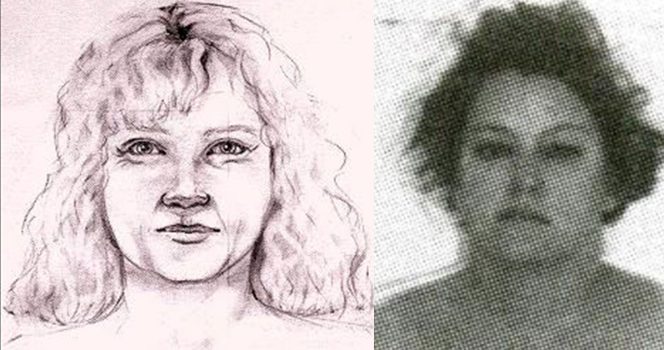
An old photograph shows her as a athletic, smiling child.
But the woman she became would shock a generation. Unlike most female killers, who turned to poison or guns, she hunted her victims up close, hands-on, strangling elderly women across Southern California in the early 1990s.
Her story is a haunting reminder of how darkness can sometimes hide behind the most ordinary faces.
Her mother was a former Hollywood starlet
We all have a fairly clear image of what a serial killer looks like: usually a man, a loner, filled with hatred toward women. The person we’re focusing on today defied that stereotype. She was impeccably dressed, meticulously groomed, and spared no expense on herself.
Yet beneath her polished exterior lurked a chilling truth: a serial killer who preyed on elderly women, murdered them violently, and then used their credit cards to fund extravagant post-murder spending sprees.
Born in California in the late 1950s to a glamorous but volatile mother and a father she would soon lose touch with, she entered the world after several miscarriages had already shaken her family.
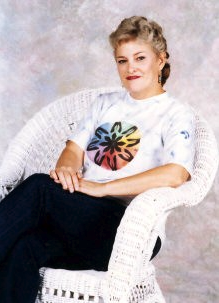
Her mother, a former beauty queen and former Hollywood starlet, was aggressive and vain, and their home was far from nurturing.
After her parents’ divorce when she was just two, she struggled to connect with others, acting out in increasingly dramatic ways — stealing money for candy, lashing out in fits of anger, and forging notes to skip school.
Athletic and hard-working
At 14, her mother was diagnosed with breast cancer. Watching nurses care for her ailing mother planted the idea of becoming a nurse herself, a career that promised purpose and control.
High school friends remembered her as athletic and a daredevil, always chasing the next adventure. In her yearbook, she wrote that her favorite pastime was “Getting into trouble” and that her favorite place to be was “free fall.”
She studied hard, driven by her ambition to become a nurse, and achieved her goal in just five years, according to New York Daily News. By the early 1980s, it seemed as her life took a promising turn.
She had also become an expert skydiver and showed remarkable skill in windsurfing and golf, often traveling to Hawaii to indulge her passions. In October 1987, she married a longtime admirer, Tom Gray, in an elegant Temecula winery ceremony.
The couple made some good money, but they spent their earnings just as quickly. They bought three cars, an ultralight airplane, several boats, and silk-screening equipment. It wasn’t long before the money ran out.
Fired from the hospital
A bitter dispute over an aunt’s will left her estranged from her family. At the same time, she continued working as a labor and delivery nurse while managing several business ventures in the gated California community of Canyon Lake.
Soon, her marriage had fractured. She moved out, became involved with a close friend, and even filed for divorce while navigating financial turmoil, including a bankruptcy filing to prevent foreclosure on her Canyon Lake home.
Around the same time, her professional life took a dramatic turn, she was fired from her nursing position due to misappropriation of prescription medications.
Following her divorce, she lost her Canyon Lake home to foreclosure.
But even as her personal and financial world crumbled, she maintained a flawless, meticulously groomed exterior. She glided through the community exuding success and charm, captivating neighbors with her charisma and polish.
Yet behind the elegance, confidence, and seemingly perfect poise, a darker truth simmered. The name that would come to haunt Canyon Lake was Dana Sue Gray.
First victim
On, Valentine’s Day in 1994, Dana asked her ex-husband to meet with her but he never showed up. He found out later that she’d taken out a life insurance policy on him.
Instead, it is believed that Dana set her sights on another target that lived nearby.
Norma Davis, 86, is thought to have been her first victim.
A neighbor discovered Norma’s lifeless body two days later. A wood-handled utility knife protruded from her neck, and a fillet knife was lodged in her chest. Aside from a broken fingernail, there were no other visible marks. At her feet lay a bloodied afghan, a silent witness to the violence that had unfolded. Investigators quickly noted that there had been no forced entry into the home.
The crime sent ripples of fear through the normally quiet, gated community of Canyon Lake.
Norma was tied to Dana’s own family in an unsettling twist of fate: she was the mother-in-law of Jeri Davis, who in 1988 had married Dana’s father, Russell Armbrust. Neighbors later revealed that Norma always kept her door locked unless expecting a visitor — making the intrusion all the more chilling.
But Dana was never convicted for the killing, there wasn’t much evidence.
A chilling shadow over Canyon Lake
But what we known is that Dana Gray targeted several women in the Canyon Lake area. One of her victims, 66-year-old June Roberts, lived in the same gated community as Norma Davis. Dana gained entry under the pretense of borrowing a book, and once inside, she strangled Roberts with a telephone cord before rifling through her credit cards, later going on a lavish shopping spree.
Not long after, 87-year-old Dora Beebe, an resident of nearby Sun City, fell prey to a similar ruse. Dana arrived at her home, asked for directions, and was invited inside. Once inside, she attacked Beebe, who was later found by her longtime partner. Gray again used the victim’s credit card and checkbook for extravagant purchases.
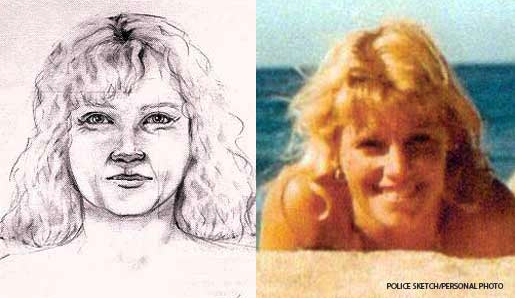
The knowledge that a serial killer was at large cast a long, chilling shadow over Canyon Lake. Many residents moved in with other family members, too afraid to remain in their own homes. To feel secure, elderly widows began sleeping in groups, taking refuge in selected homes throughout the neighborhood.
During the period of the killings, Dana resided in a modest mobile home on Mission Trail in Wildomar.
Detectives struggled to identify any suspects in the early stages. No one could have imagined that the impeccably dressed and polished Dana Gray could be a killer.
”The thought of her being able to take someone’s life is just totally unbelievable to me,” a coworker and close friend of Dana later said.
”She helped me numerous times by just being my buddy and listening to when I had problem,” the woman told The Californian in 1994.
A chilling whisper to her victim
At one point, the investigation hit such a dead end that the lead supervisor even suggested consulting a psychic. Some rumors raced through the community — some speculated that the killings were the work of a secretive cult performing dark rituals. But it wasn’t quite as sensational as it might have seemed.
And it wasn’t until Dana slipped up in a crucial way that law enforcement started to catch on. Although Dana had primarily targeted elderly women, her reach eventually extended to younger victims. Dorinda Hawkins, significantly younger than her other targets, survived an attack at her workplace.
The last thing Hawkins remembered before everything went black was her attacker’s chilling whisper: “Relax. Just relax.”
Dana had attempted the same method — strangling Hawkins with a telephone cord and taking a small amount of cash — before using another victim’s credit card for a lavish shopping spree.
Hawkins’ description proved crucial, helping law enforcement begin to piece together the terrifying pattern that had gripped the community. Dana’s downfall came when investigators traced the use of June Roberts’ credit cards in Temecula, California.
Follow the money
She had spent so extravagantly that the credit card company alerted Roberts’ family to the unusual activity. Detectives then visited the stores where the cards had been used, interviewing cashiers and gathering a physical description of Dana. They discovered she had recently dyed her hair and that she had a young boy named Jason, details that would help finally bring her to justice.
It became clear early on that Dana had killed three elderly women in order to get hold of their credit cards. At first, Dana admitted to the thefts but continued to deny the killings. She initially entered an insanity plea, a move that placed the very real possibility of a death sentence on the table.
By 1988, however, she reversed course, pleading guilty to the murders of Beebe and Roberts and the attempted murder of Hawkins. Facing overwhelming circumstantial evidence and the looming threat of capital punishment, Dana ultimately accepted a deal: life in prison without the possibility of parole. She made only one demand: the state would not prosecute her for the killing of Norma Davis.
When Dana was asked why three women had to die for her to buy things, she replied, “I got desperate to buy things. Shopping puts me at rest.”
Dana Sue Gray today
Looking through what Dana had actually bought, investigators found receipts for swimsuits, cowboy boots, a ski mask, vodka, and a luxurious spa massage. The list also included Opium perfume, fancy shoes, and sneakers for both men and women — a bizarre assortment that painted a picture of her extravagant impulses.
On October 16, 1998, Gray was sentenced to life without parole and was sent to the California Women’s Prison in Chowchilla, where she remains incarcerated.
She is not the most famous female serial killer in the country, but her story has appeared in several documentaries over the years. On February 2, 2025, the true-crime TV series Very Scary People aired an episode titled “The Angel of Death,” focusing on the life and murders of Dana Sue Gray.
A 2014 article claimed that she has occasionally sent items to murderabilia websites. At one point, she reportedly attempted to sell a pair of white panties for $250 and a prison-worn T-shirt decorated with a drawing of a blue butterfly.
Behind the prison walls
Behind prison walls, Dana has turned her attention toward advocating for the rights of female inmates. In particular, she argues that women serving life without the possibility of parole — so-called “LWOPs” — are consistently pushed aside when it comes to opportunities for rehabilitation and meaningful change.
“Most women are taught to just sit down, shut up, do what you’re told,” she told The Independent in a recent interview.
“That’s why we don’t fight back. That’s why we’re an easy population to manipulate. But it’s time that changed.”
When asked about her crimes, Dana said:
“I don’t want to talk about my crimes, because this isn’t the Dana show,” she explained, adding that she doesn’t want anyone connected to the victims to be re-traumatized by hearing about what she did.
Plea to her victims
Today, the 67-year-old convicted murderer says she has changed. She has never spoken to the families of her victims, but says that if they ever wished to meet her, she would welcome them without hesitation.
“If they want to come and cuss me out and tell me I’m a horrible person for what I did and for what they think I am, I invite them to, because it’s cathartic for them,” she said. “I want them to know that I have changed. People change.”
More than anything, she says she wants them to know that she is sorry.
“I want them to know I feel it,” Gray said, her voice shaking as she fought back tears. “Thirty years later, I feel it. And I’m so sorry.”